30% Fewer Hand Injuries!

At MCR Safety it is our desire to work closely with our Distributors and End-Users to reduce injuries in the workplace. Periodically I will post case studies that we have worked with End-Users to assist in reduction of hand injuries and/or a reduction in spending. Here is one that we worked with a key Oil & Gas company:

Opportunity:
In May of 2008, MCR Safety and a worldwide leading Oil & Gas production company began collaborating on the development of a glove that would protect workers, reduce hand injuries and set an industry standard in providing hand safety specifically designed for the Petrochemical Industry.  As a worldwide Oil & Gas producer, several different job functions and applications would need to be considered in developing an Oil & Gas glove.  The company is known for their vast expertise and success in crude oil exploration and production and transportation of crude oil and refining and natural gas exploration.

The Consulting and Compliance team worked closely with MCR Safety Product Development Managers, National Account Managers, the Prospect’s Global Management Team and Global Safety & Health Advisors, and their field personnel to develop trial and implement a mandate for the use of the MCR Safety HV100 Oil & Gas glove.

Obstacles:
Two major obstacles were introducing the HV100 Oil & Gas Glove to the prospect’s Approved Contractors which performed services for the worldwide locations both on and offshore, the second was to identify the industrial distributors that were Approved Providers for the prospect.

Solutions:
The Prospect was instrumental in formulating documentation and notification to the Approved Contractors mandating the hand protection policies that would be required by compliance if contracted to perform services.  MCR Safety C&C team members and National Account Managers collaborated to identify the Approved Providers and set pricing guidelines and terms for those selected MCR Safety authorized distributors.

Implementation:
Implementation of the Oil & Gas Glove and Hand Safety Initiative was implemented for all the Prospects worldwide locations as a mandate to comply with their Hand Safety Initiative on October 10, 2009.

Observations:
The HV100 Oil & Gas glove was developed and introduced to meet the needs of primarily the petrochemical industry and was introduced to the industrial distribution channel in the Fall of 2009.  Since the introduction of the HV100 Oil & Gas glove, several other models have been developed to meet further specifications, such as the HV200, Y200 and Y300 and the B100 models with some of these models now offer sizing up to 3X.  The MCR Safety Force Flex series is gaining recognition throughout the industrial distribution channel and the market and is no longer exclusive to petrochemical industry applications.

Success:
At the 2010 NSC, the Prospect confirmed a 30% reduction in hand injuries specifically related to the HV100 glove and the 2009 Hand Safety Mandate and Glove Safety Initiative.

The HV100 continues to gain market share and acceptance from a wide array of end-users. This is not being used only petroleum business.

***Special Thanks to Laura Nardone of MCR Safety’s Consulting and Compliance Team for this case study.

How can you have this type of success? Visit the Consulting and Compliance web page and let us know how you want fewer injuries resulting in a cost savings.


Tornado! Are you prepared?

During the spring and summer in the U.S. we have to keep our eyes to the sky looking for potential bad weather. Tornadoes can occur any time of day and form rapidly. There were 1,897 tornadoes reported in the US in 2011 (of which at least 1,688 were confirmed). 2011 was an exceptionally destructive and deadly year for tornadoes. There were estimated confirmed fatalities of 552 in the United States (compared to 564 US deaths in the prior ten years combined)*.

As the season grows we have already seen 274 tornadoes reported in the U.S. in 2012, of which at least 183 have been confirmed. There have been 55 confirmed fatalities in the United States (as of 3.8.12)*.

One can never 100% guarantee that you are protected in a tornado, but there are some valuable ways to protect yourself. I have listed a couple of excellent sources for you to read.

Redcross – Redcross Link
FEMA -  http://www.ready.gov/tornadoes

Other items to prepare with:
1) Hard Hats (during & cleanup)
2) Safety Glasses (during & cleanup)
3) Strong shoes/boots (during & cleanup)
4) Dust masks (cleanup)
5) Strong Gloves (cleanup)

Teach your entire family how to use these items and all items in your survival kits.

Before and during a potential disaster:
1) Make a plan – Use the above links to help you design a plan that fits your family
2) Practice your plan – Remember drills from school? Do it at home.
3) Prepare for survival – That is the goal
4) Stay Calm – We work better when we are calm
5) Try to laugh (it may seem weird, but it helps)

This is my son acting crazy while in the bathtub during a Tornado warning.

Please pass this information on to your friends and family so everyone can all remain safe during a potential disaster.
*(source Wikipedia)

Are Standards Necessary?

I’m a firm believer in free enterprise and believe that “over-regulation” of any industry can and will stifle growth, innovation and job creation.  However, as we have seen in recent years no regulation or extremely limited oversight can have disastrous results for consumers.  There must be a balance.  Market forces should be allowed to work and flourish while at the same time there must be protections and oversight in place to keep entities (including manufacturers) from taking dangerous “short-cuts” to drive profits and to keep predators completely out of the market.

The safety PPE market regulation comes in the form of OSHA (Occupational Safety and Health Administration).  OSHA was created to help protect workers from workplace hazards, by establishing and enforcing workplace safety and health requirements.  OSHA requires employers to provide their employees with a safe workplace and appropriate protective equipment.  A point of confusion sometimes is that while OSHA may mandate the use of a product that meets a certain standard, OSHA does not write any standards or certify any products.

So what is a Standard and why do we need them (specifically in our safety industry)?  In simple terms standards create the “norm” or “what’s expected”.  Standards establish compatibility, suitability and levels of performance.  They put credibility and a certain level of trust behind the products that are manufactured to specific industry standards.

At MCR Safety we are strong supporters of PPE product standards and believe they are vital to assure workers are well protected from the many diverse hazards that may be present in the workplace.  We are a member of ISEA (International Safety Equipment Association).  ISEA is a recognized leader in the development of safety standards in the U.S. and around the world.  The association also works with Congress and government agencies to educate and influence policy makers on the importance of safety regulations and oversight in the workplace as well as the necessity of standards and their enforcement.  For more than 75 years ISEA has worked with its member company’s to promote the standardization of safety equipment.  MCR Safety is an active participant on all product group committees within ISEA for our core product lines.

When you or your fellow coworkers put on a pair of safety glasses you should want to know they meet a standard that has been developed by experts, tested to the rigors of the workplace and is consistently enforced.  This same level of confidence should apply whether you are wearing a respirator, garment or pair of gloves.  There is no room to “short cut” and no place for predators when it comes to protecting life and limb at the workplace!

Celebrate! Not Emergency Room visit!

One way people like to celebrate the New Year is to shoot fireworks. This can be a fun and exciting event. This can also be a dangerous and deadly event. Did you know that sparklers could burn as hot as 1200 degrees?  The US Consumer Product Safety Commission has some great tips for fireworks safety.  The video shows some radical explosions and a great testimony of what can happen when you play with fireworks.

US Consumer Product Safety Commission

Have a happy and SAFE New Year’s holiday!

Some thoughts to ponder!

Our hope is that this season of giving provides you with joy and comfort. Through the holiday season MCR Safety wants to wish you all the best and we look forward to a blessed new year.


Please take time over the holiday season to reflect on your blessings:

  • Gloves – You are typing and clicking your mouse due to the blessing of protection from top-notch gloves.
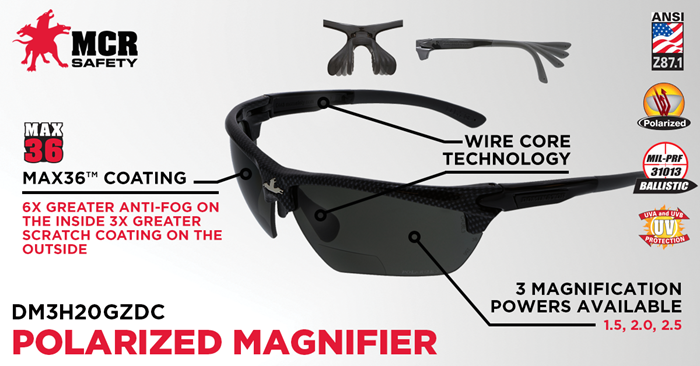
  • Glasses – You are reading this message because you protected your eyes with high quality safety glasses.
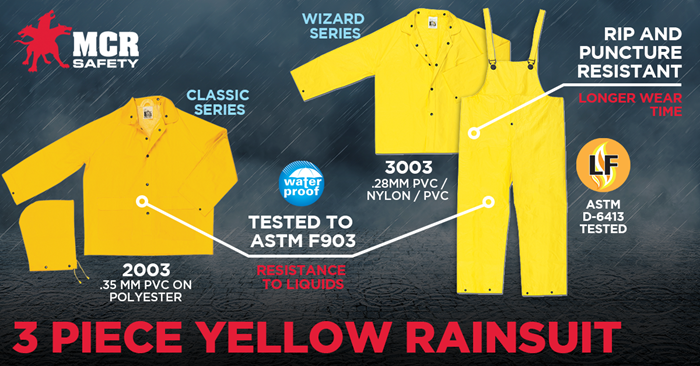
  • Garments – And don’t forget how that your garments protected you from quick chemical splash.

We at MCR Safety are thankful that we were able to provide products that protect workers across the globe in 2011 and look forward to protecting you in 2012.

MCR Safety Holiday Schedule

In effort to help with your holiday planning, please be advised MCR Safety will be observing the following schedule:

  • Dec 22 Normal shipping day
  • Dec 23 We will ship orders received until 11am
  • Dec 26 Closed in observance of Christmas
  • Dec 27 Resume regular operations
  • Dec 30 Normal shipping day
  • Jan 2 Closed in observance of New Years

This decision is based on notice that most LTL carriers will not move freight on December 23rd.    UPS and Fedex advise of normal shipping schedules on Friday, December 23rd and closed on Monday, December 26th.

We appreciate your support and hope this helps with your holiday scheduling.

HAPPY HOLIDAYS!!!

Why do you do what you do?

I, like most of you am often asked, “…so, what do you do for a living?”  How do you respond when asked this question?  I’ve recently begun to give this more thought in my response.

At MCR Safety, our team members perform many different tasks and duties.  Some are responsible for loading and unloading product; some are responsible for our IT infrastructure, some keep our equipment operational.  The point is we are a company of many different and diverse tasks and responsibilities.  But what do we do for a living?  WE PROTECT PEOPLE!  We provide the products and services that protect men and women around the world from workplace hazards.  I’ve shared with our team many times, we may not wear a badge or holster a firearm, but we do protect people.  Our badge of honor is making sure our products allow men and women to return home from work to their families and friends in the same condition they left for their work sites.

To everyone in the safety PPE industry, from the plant manager, safety engineer, distribution partners and suppliers to our MCR team members…..look beyond the boxes, look beyond the book keeping and compliance documents.  What you will see is a man or woman, who by your actions and decisions, will return home with their vision intact, their hands and limbs in tact.  They will see their children, they will hold hands with their spouse and they will play with their friends.  They will do this in part because of YOUR actions and decisions to protect them with high quality, appropriate PPE.

Mitch Lewellen

CEO – MCR Safety

A message from Our CEO, Mitch Lewellen

Honoring Veterans

MCR Safety is proud to be a sponsor of the Wounded Warrior Project. As a company, we realize the sacrifice our service men and women give to support our freedom both in the U.S.A. and abroad. We say thanks by donating a percentage of all sale proceeds of our digital camouflage gloves and glasses.

Wounded Warrior Project (WWP) began when several veterans and friends, moved by stories of the first wounded service members returning home from Afghanistan and Iraq, took action to help others in need. What started as a program to provide comfort items to wounded service members has grown into a complete rehabilitative effort to assist warriors as they recover and transition back to civilian life.

Gearpackshot

Tens of thousands of wounded warriors and caregivers receive support each year through WWP programs designed to nurture the mind and body, and encourage economic empowerment and engagement. To learn more about WWP, take a look at our mission to see how it influences the innovative programs and services offered to wounded warriors.

Today is Veteran’s Day. Please take time to say thank you to those who serve or have served.

Get your geek on! It’s test time.

MCR Safety’s Innovations Technology Center (ITC) works as an internal Research & Development (R&D) facility dedicated to improving the quality and integrity of our products. Important data is collected from our products, competitor products and products in development to help provide better quality to the customer as per their requirements, needs and expectations. ITC is able to run multiple tests on the quality of our gloves making it easier for the customer to choose which one suits his or her needs the best.  These gloves are categorized from the lowest to the highest quality based on the different performance aspects of the material. Through ITC we see opportunities through the testing data and analyzing the results in order to provide the best information to the customer. ITC performs testing operations based on ANSI/ISEA and CE standards. ITC also develops its own internal test procedures to do comparisons between the materials and obtain the results based on the best possible data and analysis.

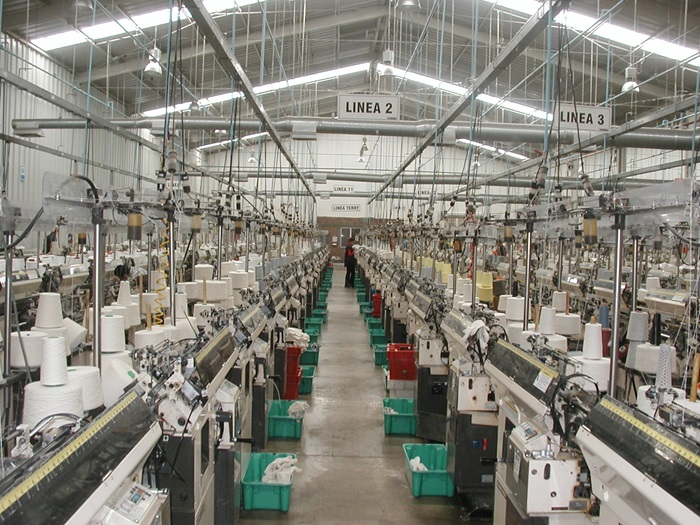
Capabilities for the testing of gloves include abrasion, cut, tear, puncture, tensile, and dexterity. String knit manufacturing equipment is also an available resource for experimenting with new innovative yarn combinations.  Glasses and face shields are subjected to ANSI high velocity impact testing.  Garments can be tested for laundering capabilities for durability of fabric materials and reflective coatings. The goal of our ITC lab is to utilize these technical resources to assure performance of our safety gear as well as contribute to innovative product development.

We believe in the numbers we obtain from rigorous testing, ITC helps to give the shape to those numbers to produce the best quality product in the market.

Special thanks to Terry Bell, Vipin Myneni, and Josh Murrell for their input on this article.


Ocean Freight Rates

Ocean freight rates will remain docile, bucking the upward trend likely for shipments made via truck and rail over the coming year or so. A slew of new container ships will keep downward pressure on freight rates. Orders in the pipeline for big ships, those carrying 8,000-plus normal containers, will nearly double the number of the Goliaths in the fleet. Additionally, subdued demand for transport from Asia to the U.S. and Europe means more ships vying for less freight. But surcharges won’t disappear. Carriers see add-on fees for pricey fuel and for service during peak shipping times as their best bet to shore up revenue in the soft economy. The biggest customers can haggle a bit to hold charges down. Smaller users can join a shippers’ association to beef up their bargaining power.

Glen Herald, COO MCR Safety